Key takeaways
- Plumbers usually charge an hourly or day rate, a fixed price per job, or a premium emergency callout, and the South East sits at the top end of UK rates.
- Kent is a genuinely hard-water county: South East Water's supply averages around 297 ppm calcium carbonate, and limescale is a constant, quiet cost driver.
- Kent isn't served by one water company. South East Water, Southern Water, Affinity Water (Folkestone and Dover) and SES Water each cover different areas, so check your own postcode for the exact hardness.
- Gas work is different: any work on a boiler or gas appliance must legally be done by a Gas Safe registered engineer, not a general plumber.
- Pre-1970 Kent homes often still have lead supply pipes. Replacement typically runs £1,500–£4,000, though 'moling' can avoid digging up the garden, and the water company usually renews the public-side pipe free.
On this page
“How much will it cost?” is the first question everyone asks a plumber, and the honest answer is “it depends.” But you can go in far better informed. Below is how plumbers in Kent typically charge, the jobs you’re most likely to need, and one very local factor, the county’s hard water, that quietly inflates the running cost of almost everything that touches your pipes.
How plumbers charge
There are three common pricing models, and a good plumber will tell you upfront which one applies:
- Hourly or day rate. Used for open-ended work where the plumber can’t know the scope until they start: tracing a leak, clearing a stubborn blockage, or general repairs.
- Fixed price per job. Common for defined tasks: fitting a new tap, swapping a radiator, installing a toilet.
- Emergency callout rate. For urgent, out-of-hours work (a burst pipe, no water, a leak through a ceiling), usually charged at a premium, often with a set fee for the first hour.
One Kent-relevant reality: the South East is the priciest part of the UK for trades. As an indicative guide, plumber hourly rates here commonly sit around £60 to £100, day rates in the low hundreds of pounds, and emergency callouts often £40 to £150 (sometimes higher, or a percentage surcharge). Treat those as bands, not quotes. And pin down two things every time: whether the price includes parts and VAT, and whether the callout or first hour is charged separately.
The hidden cost driver: Kent’s hard water
Here’s the local factor most cost guides miss. Kent is a hard-water county, because so much of its supply rises through the chalk and greensand of the North Downs, one of the most intensively used aquifers in Britain. That mineral-rich water is perfectly safe to drink, but it’s tough on your plumbing.
How hard? South East Water’s supply averages around 297 ppm calcium carbonate, firmly in the “hard” band (the standard scale runs soft below 100, hard at 200 to 300, very hard above 300). Figures vary by area: Maidstone (ME14) has been measured around 224 ppm, while the Affinity Water zone covering Folkestone and Dover runs around 268 ppm. One important correction to the way this usually gets written: Kent isn’t served by a single water company. Depending on where you live your supplier may be South East Water (most of central, west and mid Kent), Southern Water, Affinity Water (Folkestone and Dover) or SES Water (the north-west, bordering Surrey), so check your own postcode on your supplier’s hardness tool for the exact number.
Limescale from that hard water:
- Furs up boiler heat exchangers and immersion elements. A commonly cited industry figure is roughly 7% more energy per millimetre of scale, and immersion heaters can lose far more.
- Narrows pipework and blocks showerheads, taps and valves over time.
- Shortens the life of appliances: kettles, dishwashers, washing machines and combi boilers all wear faster.
The practical result is that Kent households tend to spend more, over the years, on descaling, repairs and early replacements than people in soft-water regions. It’s why so many local plumbers fit scale reducers or full water softeners, and why protecting a new boiler with a system filter is money well spent here. Asking a Kent plumber what they’d recommend for limescale is one of the few genuinely region-specific questions worth putting to them.
What common jobs involve
A rough sense of the work behind the price:
- Dripping tap or running toilet. Usually a quick fixed-price fix, though hard-water valves can be seized solid.
- Leak detection. Often hourly, because finding the leak is the job; fixing it can be quick or involved.
- New radiator or bathroom install. Fixed price, and for a full bathroom you may want to line up bathroom fitters alongside the plumbing.
- Power flush. Clearing sludge and scale from a central heating system; a good idea before or with a new boiler, especially in Kent’s hard-water homes.
- Boiler work. See the important caveat below.
Boilers and gas: a legal line you can’t cross
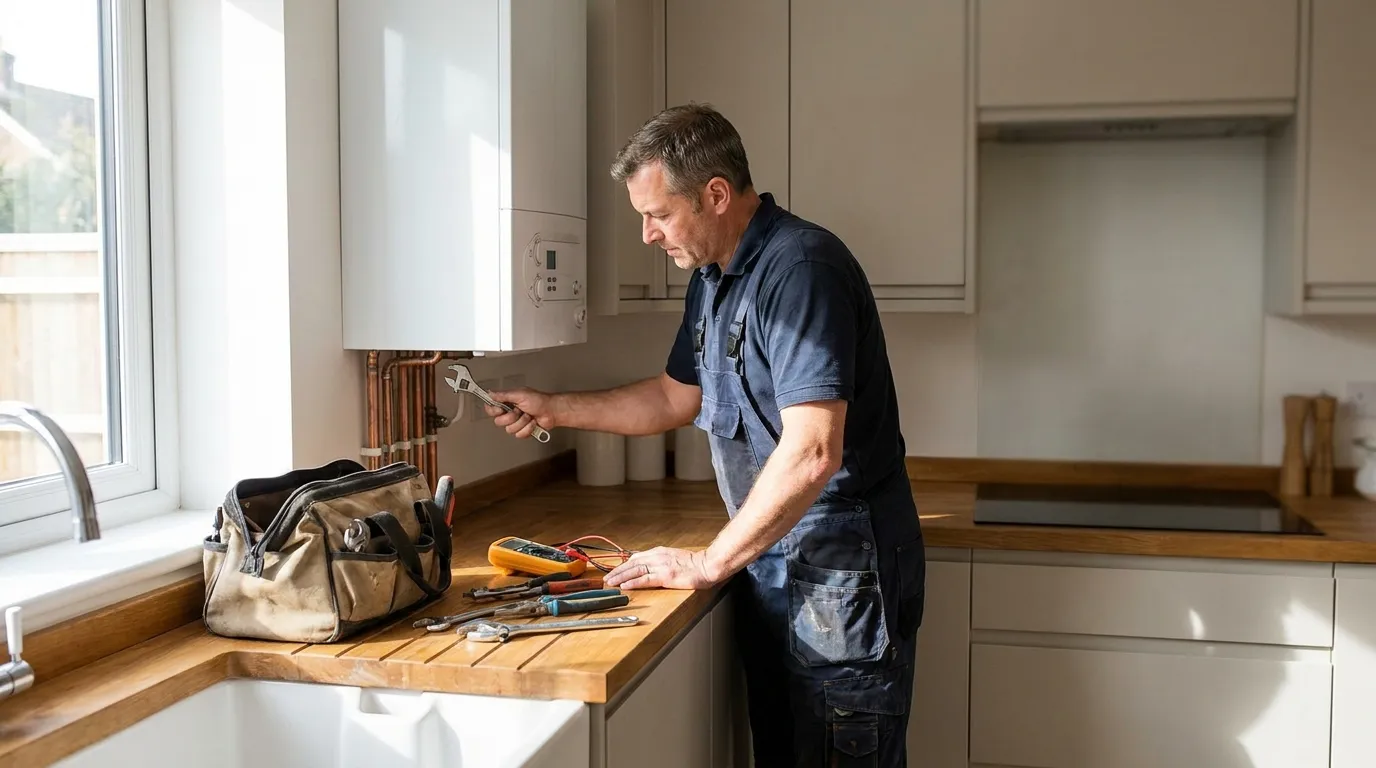
This is the one hard rule. Any work on a gas boiler or gas appliance must be done by a Gas Safe registered engineer, not a general plumber. This is the law under the Gas Safety (Installation and Use) Regulations 1998, and Gas Safe replaced the old CORGI scheme in 2009. Many firms have both under one roof, but for a new boiler, a service or any gas job, always:
- Check the engineer is on the Gas Safe register, and
- Ask to see their Gas Safe card (it lists what they’re qualified to work on).
A new combi boiler, supplied and fitted, typically lands in the low thousands of pounds as a rough guide. Given the hard-water context, a filter and often a softener are sensible add-ons to protect the spend. If you’re upgrading heating more broadly, reviewed heating engineers are the right people to quote.
Period homes and old pipework
Kent’s older housing adds a wrinkle. In Victorian and Edwardian homes plumbers often meet:
- Lead supply pipes. Common in pre-1970 stock and best replaced. Replacement typically runs £1,500–£4,000, but “impact moling” can often pull a new pipe through without digging up the garden, and the water company will usually renew the public-side lead pipe free once you’ve replaced your private section.
- Imperial-sized pipework that doesn’t match modern metric fittings without adaptors.
- Low or unbalanced water pressure, which affects showers and combi performance.
None of this is unusual, but it’s exactly why you should get the plumber to look at the job before quoting rather than pricing blind over the phone.
Getting a fair price
To keep costs sensible and avoid surprises:
- Get three written quotes for anything beyond a minor repair.
- Check the quote separates labour, parts and VAT.
- Look for recognised membership (WaterSafe, APHC or CIPHE) and public liability insurance.
- Verify Gas Safe registration for any boiler or gas work.
Browse reviewed plumbers in Kent by town (for example plumbers in Maidstone or plumbers in Canterbury), get your three quotes, and ask each one how they’d handle the county’s hard water. It’s the local question that separates a plumber who knows Kent from one who doesn’t.
Frequently asked questions
How do plumbers charge, by the hour or per job?
Both are common. Many plumbers quote an hourly or day rate for open-ended work like fault-finding, and a fixed price for defined jobs like fitting a tap or a radiator. As an indicative guide, hourly rates in London and the South East commonly sit around £60 to £100, with day rates in the low hundreds, and emergency callouts often £40 to £150 (sometimes more, or a percentage surcharge) for evenings, weekends and bank holidays. Always confirm which model applies, and whether the quote includes parts and VAT, before work starts.
Why does hard water matter for plumbing costs in Kent?
Kent is a hard-water county because its water rises through the chalk and greensand of the North Downs, picking up calcium and magnesium. South East Water's supply averages around 297 ppm calcium carbonate, firmly in the 'hard' band, and limescale furs up pipes, heating elements and boiler heat exchangers. A commonly cited industry figure puts the efficiency penalty at around 7% more energy for every millimetre of scale on a heat exchanger. Over time that means more descaling, more repairs and earlier replacements, which is why so many Kent households fit a scale reducer or water softener.
Do I need a Gas Safe engineer or a plumber?
It depends on the job. General plumbing (taps, leaks, radiators, bathrooms, drainage) can be done by a plumber. But anything involving a gas boiler or gas appliance must, by law (the Gas Safety (Installation and Use) Regulations 1998), be carried out by a Gas Safe registered engineer. Gas Safe replaced the old CORGI scheme in 2009. Many firms employ both, but always check the engineer is on the Gas Safe register, and ask to see the card, for any gas or boiler work.
How much does a new boiler cost in Kent?
As a rough guide only, a new combi boiler supplied and fitted typically runs into the low thousands of pounds, varying with the make, the complexity of the install and whether pipework or flue positions change. Kent's hard water makes a strong case for a system filter and, in many homes, a softener to protect that investment. Treat any figure as indicative and get three detailed written quotes.
How do I check a plumber is reputable?
Look for membership of a recognised body such as WaterSafe (the national umbrella register backed by the water companies), APHC (Association of Plumbing and Heating Contractors) or CIPHE (Chartered Institute of Plumbing and Heating Engineering), proof of public liability insurance, a clear written quote that separates labour, parts and VAT, and recent local work you can ask about. For gas work, verify Gas Safe registration.
Find a trusted Kent business
Browse reviewed local listings by category and town across the county.
Search the directory