Key takeaways
- Kent is the 'Garden of England', so a genuinely local roast should show it, with named local meat, seasonal Kent veg and a Kentish drink.
- Romney Marsh salt-marsh lamb grazes samphire and salt-tolerant grasses, giving a distinctive flavour; it's best from late summer to Christmas.
- Pair it with the landscape: Shepherd Neame of Faversham is Britain's oldest brewer, or pour a Kent sparkling wine grown on the same chalk seam as Champagne.
- Look for seasonal Kent sides: samphire alongside the lamb, cobnuts in autumn, asparagus in late spring.
- Book ahead on summer and walking-season Sundays, especially for country pubs near Kent Downs and High Weald walks.
On this page
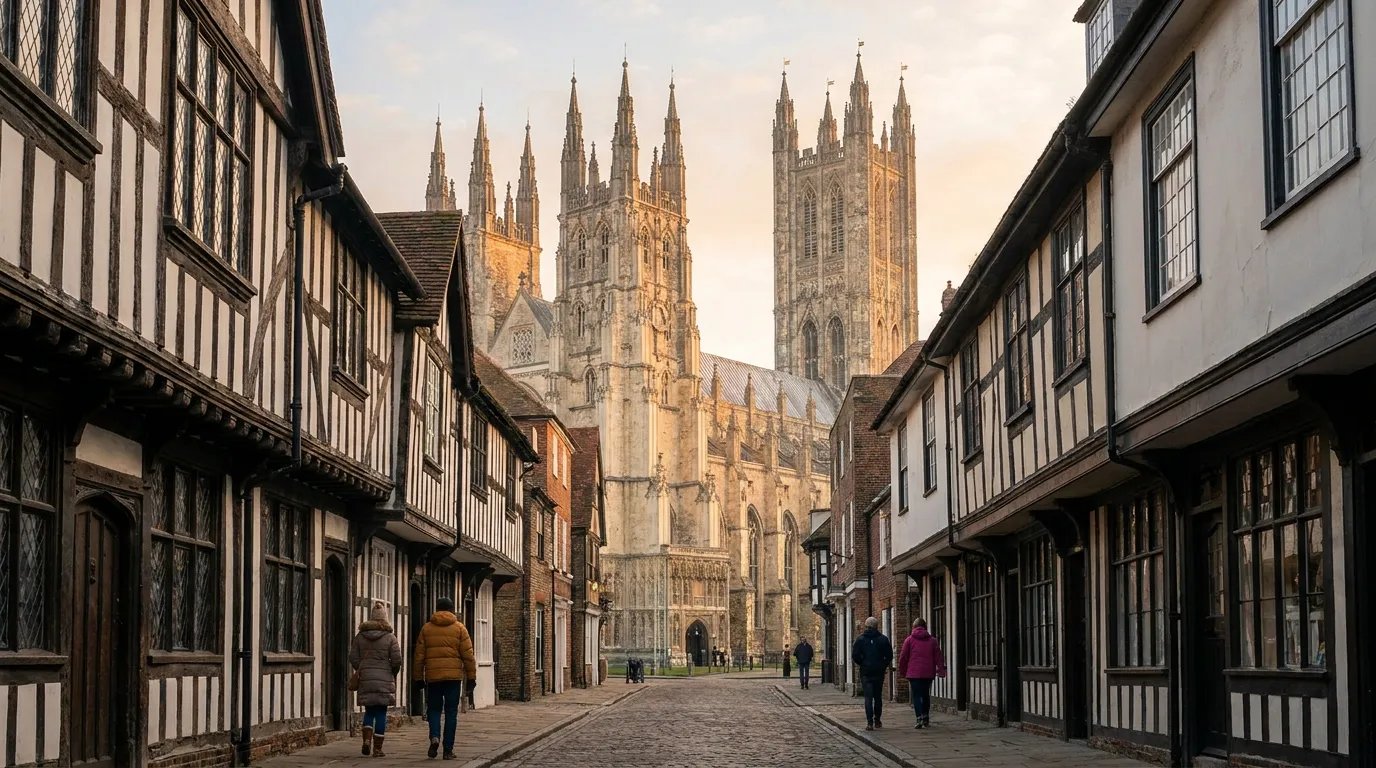
A good Sunday roast is one of life’s quiet pleasures. But Kent isn’t just anywhere. It’s the Garden of England, a county defined by its orchards, marshes, hop gardens and, increasingly, its vineyards. A roast that makes the most of that tastes of the place. Here’s how to find one.
What “local” really means on a Kent roast
The county’s nickname is tied to its produce: legend has it Henry VIII fell for Kent over a bowl of its cherries, and Dickens summed the county up as “apples, cherries, hops and women.” A roast that earns its “local” label should reflect that heritage: meat reared nearby, vegetables in season, and something Kentish in the glass. Once you know what to look for, the good ones are easy to spot.
The meat: Romney Marsh salt-marsh lamb
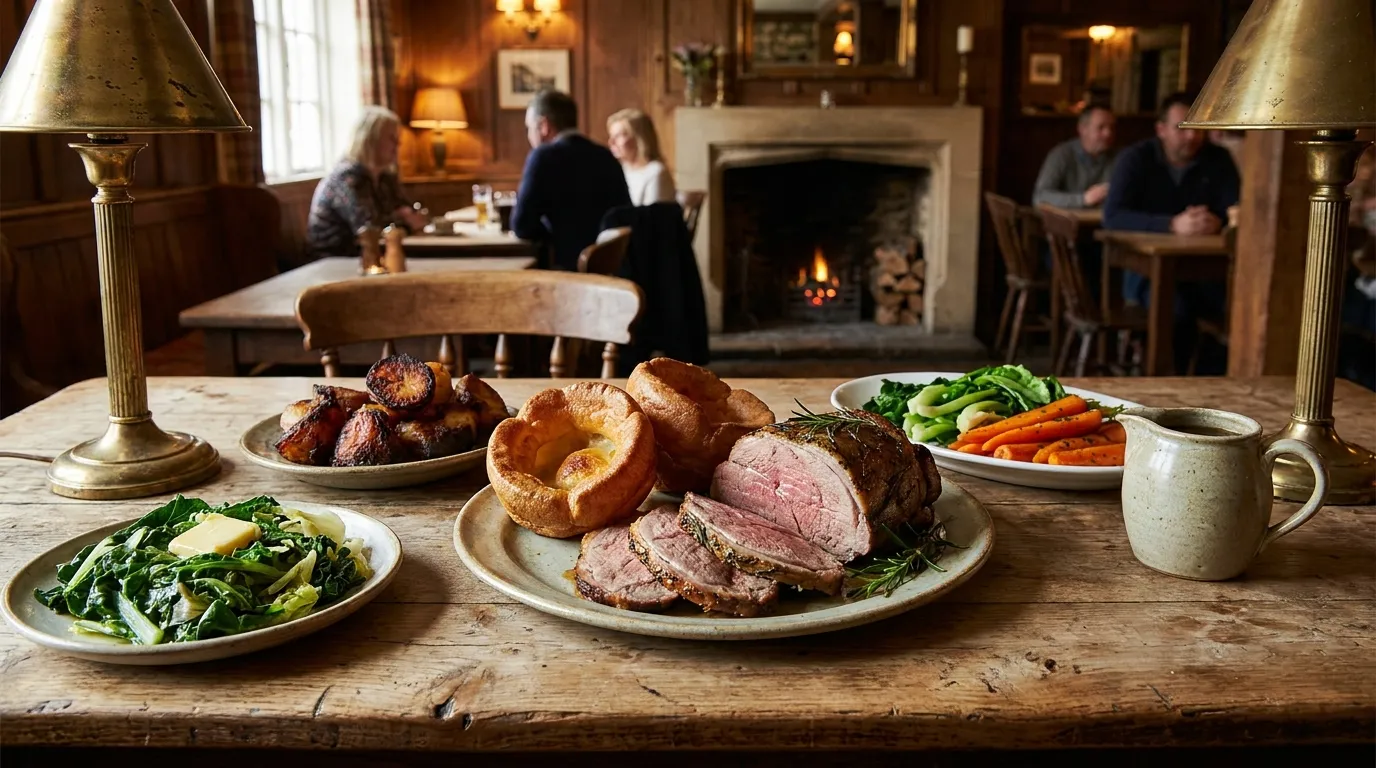
Kent’s marquee roast meat is Romney Marsh salt-marsh lamb. The sheep graze the salt-tolerant grasses and samphire of the marshes, and that diet is what gives the meat its distinctive, sweeter, more delicate flavour. You’re effectively tasting the marsh through the lamb.
A couple of honest notes: it’s a recognised regional speciality, but unlike Welsh Gower salt-marsh lamb it doesn’t hold a legally protected name, so look for clear provenance. And it’s seasonal: lambs born in spring fatten on the summer marsh, so the meat is generally at its best from late summer to Christmas.
Seasonal Kent sides worth looking for
Provenance isn’t just the meat. The sides are where a kitchen shows it’s actually thinking locally:
- Samphire alongside the lamb: the same salty marsh plant the sheep graze, in season roughly June to August.
- Kentish cobnuts in autumn: fresh, milky hazelnuts unique to the county, lovely in a stuffing or salad from mid-August.
- Asparagus in late spring, and Kent’s orchard fruit (cherries and apples) for pudding.
A roast that swaps in samphire, cobnuts or local greens with the seasons is one that means it.
What to drink: a glass of the landscape
This is where Kent really stands apart.
Ale. Shepherd Neame in Faversham is officially Britain’s oldest brewer, with brewing on the site for centuries. It still uses chalk-filtered water from its own well and overwhelmingly Kent-grown hops. Kent was the historic heart of English hop growing, which is why those conical oast houses dot the countryside. A pint of Kentish ale with a roast is, quite literally, drinking the landscape.
Wine. Kent’s newer claim to fame: the North Downs sit on the same chalk seam that runs under Champagne, which is exactly why Kent is now England’s premier sparkling-wine county. So important that Champagne house Taittinger planted its first English estate, Domaine Evremond, near Chilham. Names to look for include Chapel Down, Gusbourne, Biddenden (Kent’s oldest family vineyard, which also makes cider from local apples) and Balfour. A Kent sparkling or a glass of red with the lamb is a properly local pairing.
Where the food scenes are
Different corners of Kent have very different scenes, so it pays to search locally:
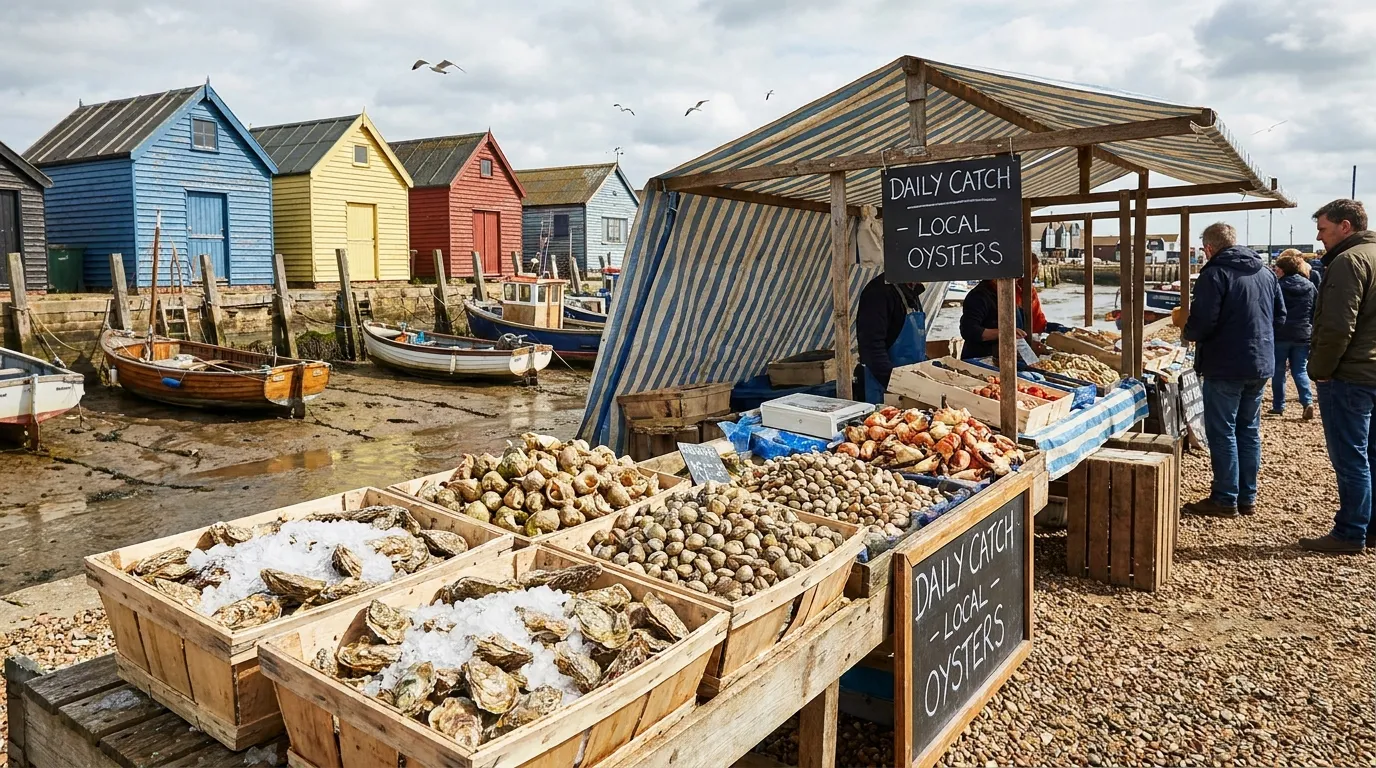
- Whitstable. The town widely credited with kick-starting the South East’s food reputation; seafood-led, and famous for its oysters since Roman times.
- Faversham. A historic market town with Shepherd Neame and a celebrated farm-shop food hall.
- Folkestone. A harbour-led dining renaissance around the Harbour Arm.
- Margate and Deal on the coast, and Tenterden as the gateway to Kent’s wine country.
Some of the best roasts, though, hide in country pubs just outside the towns, worth the short drive. Browse reviewed pubs in Kent and restaurants in Kent by town to find one near you.
How to find a genuinely local roast
Put it together and a great Kent roast is easy to recognise: named local meat (Kent or Romney Marsh lamb, locally reared beef), seasonal Kent vegetables, and a Kentish ale or sparkling wine on the list. Farmers’ markets and farm shops (Kent has more than fifty markets and hundreds of producers) are a good way to see who’s sourcing locally in your area.
A few practical tips:
- Book ahead on summer and walking-season Sundays. Kent’s coast and Downs draw heavy weekend footfall, and the best country pubs fill fast.
- Pair a roast with a walk in the Kent Downs or High Weald National Landscapes: many of the prettiest pubs sit on or near walking routes, and plenty are dog-friendly.
- Ask before the early sitting runs out, as most kitchens stop serving roasts mid-afternoon.
Ready to plan lunch? Browse pubs and restaurants in your town, look for the local-provenance signs above, and book early.
Frequently asked questions
What makes Kent lamb special?
Romney Marsh salt-marsh lamb grazes on the natural grasses and samphire of the marshes, which gives the meat a distinctive, sweeter and milder flavour. It's a recognised regional speciality (though, unlike Welsh Gower salt-marsh lamb, it carries no protected PDO status), and it's generally at its best from late summer through to Christmas.
When are Whitstable oysters in season?
Native oysters follow the traditional 'R months' rule, eaten from September to April, and left alone over summer when they spawn. Pacific rock oysters, which mature faster, are available year-round, so a summer table can still offer oysters.
What Kentish drink goes with a roast?
Two great local options. There's a Kentish ale (Shepherd Neame in Faversham is Britain's oldest brewer and uses mostly Kent-grown hops), or a Kent sparkling wine. The North Downs sit on the same chalk seam as Champagne, which is why producers like Chapel Down, Gusbourne, Biddenden and Balfour have made Kent England's leading sparkling-wine county.
When are Kentish cobnuts in season?
Cobnuts (a type of fresh hazelnut traditionally grown in Kent) have a short autumn season, sold green and milky from mid-August and fuller-flavoured by October. They make a lovely seasonal addition to an autumn roast stuffing or salad.
How do I find a roast that actually uses local produce?
Look for the signs of real local sourcing: named Kent or Romney Marsh meat, seasonal Kent vegetables, and a Kentish ale or sparkling wine on the list. Farmers' markets and farm shops are a good way to see who supplies provenance-led food in your area.
Find a trusted Kent business
Browse reviewed local listings by category and town across the county.
Search the directory